A garage door off track is one of the few household problems where the wrong first move can genuinely hurt someone. The door is heavy, the springs holding its weight store a great deal of energy, and once a roller leaves the track that weight is no longer being carried the way the system was designed to carry it. The instinct is to press the button and see if it will right itself. That instinct is the thing to resist. What follows covers what to do immediately, what causes it, and what a proper garage door repair involves once a technician arrives.
SHORT ANSWER
Stop using the door immediately. Do not press the opener button again, do not try to force it by hand, and keep people and vehicles out from under it. Unplug the opener so nobody operates it by accident. Leave the door where it is rather than trying to move it to a more convenient position, and call a technician. An off-track door can fall, and the springs and cables involved carry enough stored energy to cause serious injury.
Do These Four Things First
- Stop operating the door. Every attempt with the opener drives a misaligned door further off, bends track, and can damage panels and the opener itself.
- Unplug the opener. This prevents anyone else in the household from trying it, which is the most common way a manageable repair becomes an expensive one.
- Clear the area. Move vehicles out if you can do so safely without passing beneath the door. Keep children and pets away from the opening entirely.
- Leave it where it is. Do not try to lift, lower, or reposition it. A partially open door off its track is being held by whatever is left of a system that has already failed.
If the door is open and a vehicle is underneath it, judge carefully. A car is replaceable and worth less than the risk of moving it out from under an unsupported door.
Why It Is More Dangerous Than It Looks
Residential garage doors weigh well over a hundred pounds, considerably more for insulated and double-wide doors. That weight is not held by the opener. It is counterbalanced by torsion springs under high tension, transferred through cables to the bottom of the door.
When the door comes off track, that carefully balanced system is no longer in balance. If a cable has come off its drum or a spring has broken, one side may be carrying weight the other side is not. A door in that condition can drop suddenly, and the springs and cables themselves can release stored energy without warning if disturbed.
This is why technicians use specific tools for spring and cable work, and why the same work injures people who attempt it with a wrench and a ladder.
What Causes a Garage Door Off Track Situation
- Vehicle impact. The single most common cause. Backing into a door bends track, damages panels, and knocks rollers out of alignment, often with more internal damage than the dent suggests.
- Broken or slipped cable. When a cable comes off its drum or breaks, one side of the door drops while the other stays put, which pulls rollers out of the track.
- Broken torsion spring. Once a spring fails, the door is effectively unbalanced and far heavier, and it can jump the track on the next cycle.
- Worn or broken rollers. Rollers wear out, stems break, and a failed roller leaves the track and takes the door with it.
- Bent or loose track. Impact, loose lag bolts, or settling can misalign track enough that rollers bind and climb out.
- Obstruction. An object left in the door’s path, or debris built up in the track, can stop one side while the opener keeps pulling the other.
- Hinge failure. On sectional doors, a failed hinge lets panels shift out of alignment with each other.
Central Valley conditions contribute to several of these. Agricultural and road dust accumulates in tracks and around rollers, and summer heat thins lubricant so it migrates away from where it is needed. A door that has not been serviced in years in this climate is running with more friction than it should.
The Emergency Release Cord: When Not to Pull It
The red cord hanging from the opener rail disconnects the door from the opener so it can be moved by hand. It exists for power outages, and it is genuinely useful in the right situation.
It is not the right situation when the door is off track, when a spring is broken, or when a cable has failed. In those conditions the counterbalance system is not holding the door’s weight properly, and disconnecting the opener can allow an open door to come down hard.
If the door is already closed and you simply need it to stay closed, leaving it alone is the safest choice. If the door is open and you are unsure why, that is a reason to call rather than a reason to pull the cord.
What Not to Attempt
- Do not use the opener to work it loose. The motor will not fix alignment and will cause further damage.
- Do not pry rollers back into the track. Video guides make this look simple. They generally skip the part where the door is under load.
- Do not touch the springs or cables. Torsion spring work requires proper winding bars and training, and is the most dangerous part of any garage door.
- Do not hammer bent track back into shape. Bent track needs replacing, and straightening it produces a door that binds and comes off again.
- Do not leave it partially open. A door stopped mid-travel off its track is the least stable position it can be in.
Warning Signs Before It Happens
Doors usually signal this in advance, and the signs are easy to catch during a routine service visit.
Listen for grinding or scraping rather than the usual roll. Watch whether the door rises evenly or one side lags. Look for gaps between a roller and the track, bends in the track, and fraying on the cables. A door that hesitates at the same point every time is telling you something about that spot.
What the Repair Involves
The scope depends on what failed and what the failure damaged on its way.
Straightforward. A single roller, a cable reset onto the drum, minor track realignment, and tightening hardware. Often completed in one visit.
Moderate. Track section replacement, multiple rollers, hinge replacement, or spring replacement where a broken spring caused the problem. Springs are replaced in pairs on most doors, since a spring that failed means its partner is the same age.
Extensive. Impact damage that creased panels, bent multiple track sections, or racked the door frame. At this point the question becomes whether panel replacement makes sense or whether replacement is the better use of the money, particularly on an older door where matching panels may be difficult.
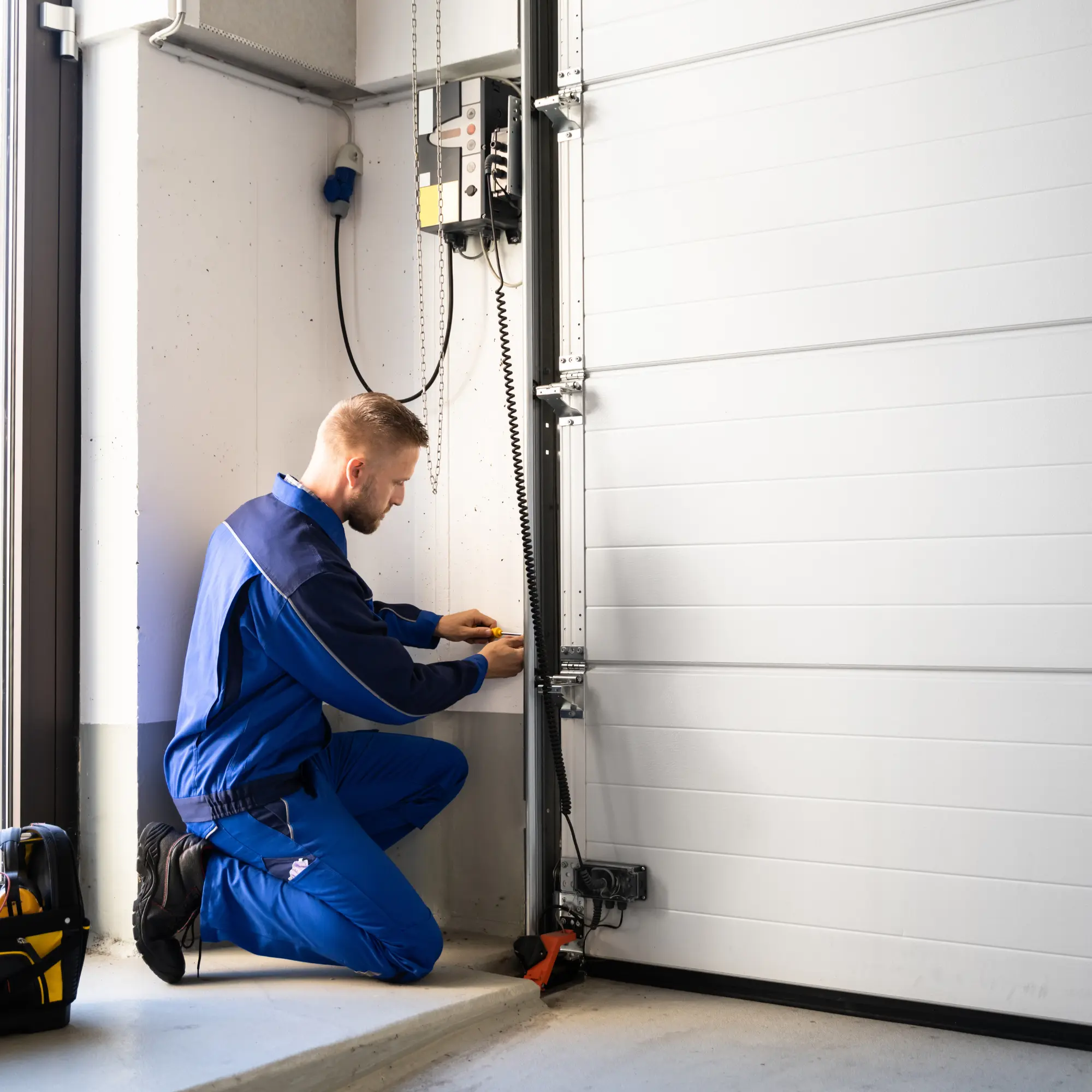
A technician should also check the opener after any off-track event, since the motor has usually been working against a jammed door and the force settings and safety reverse need verifying.
Preventing the Next One
- Keep tracks clear of dust and debris, which matters more here than in most climates.
- Have rollers, hinges, cables, and springs inspected annually, ideally before summer.
- Lubricate correctly, using a product intended for garage doors rather than a general spray that attracts dust.
- Tighten track hardware and lag bolts during service rather than waiting for something to shift.
- Replace worn rollers before they fail rather than after.
- Test the safety reverse regularly, since a door that does not reverse will keep driving into an obstruction.
- Repair minor impact damage promptly, because a small bend in track becomes a binding point that eventually pulls a roller out.
Key Takeaways
- Stop operating the door and unplug the opener before anything else.
- Keep people and vehicles clear, and do not pass underneath an off-track door.
- Do not pull the emergency release when the door is off track or a spring or cable has failed.
- Vehicle impact, cable failure, broken springs, and worn rollers cause most off-track events.
- Central Valley dust in tracks and heat-thinned lubricant both increase friction and wear.
- Torsion springs and cables carry enough stored energy to cause serious injury.
- Grinding sounds, uneven travel, and visible track gaps are the warnings that come first.
- Have the opener checked afterward, since it has been working against a jammed door.
Frequently Asked Questions
Can I put the door back on the track myself?
It is not advisable. The door is heavy and under spring tension, and the reason it came off often involves a cable or spring problem that is not visible. Attempting it is how people get hurt and how repairs get more expensive.
Is it safe to leave the door off track overnight?
If the door is closed and nobody operates it, leaving it alone until a technician arrives is generally the safest option. Unplug the opener so nobody tries it, and keep the area clear.
My car is under the open door. What do I do?
Do not walk beneath the door. If the vehicle cannot be moved without passing under it, wait for a technician. The vehicle is worth less than the risk.
How much of the door is usually damaged?
It varies widely. A roller that left the track causes little damage if caught immediately, while a door that was operated repeatedly after coming off can have bent track, damaged panels, and a strained opener.
Will my opener need replacing too?
Often not, but it should be checked. An opener that has been forcing a jammed door may have damage, and the force settings and safety reverse need verifying after the door is corrected.
How do I stop this happening again?
Annual service covering rollers, cables, springs, hinges, and track alignment catches most of the conditions that lead to it. In Fresno, keeping dust out of the tracks and using proper lubricant matter more than most owners realize.
Conclusion
A garage door off track is a stop-what-you-are-doing problem rather than a try-one-more-time problem. Unplug the opener, keep everyone clear, and leave the door alone. Most off-track repairs are straightforward when the door is dealt with promptly, and most of the expensive ones got that way because somebody kept pressing the button.
A Plus Garage Doors repairs off-track doors, broken springs and cables, damaged panels, and openers for homes and businesses throughout Fresno and the surrounding Central Valley. If your door has come off its track, reach out today and leave it where it is until someone can look at it.